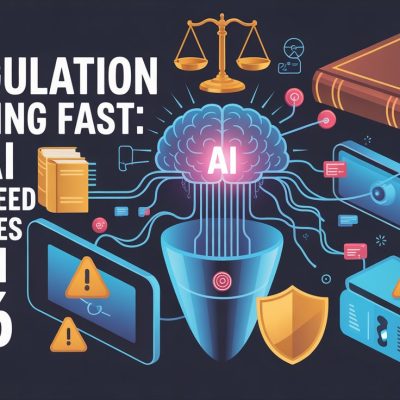
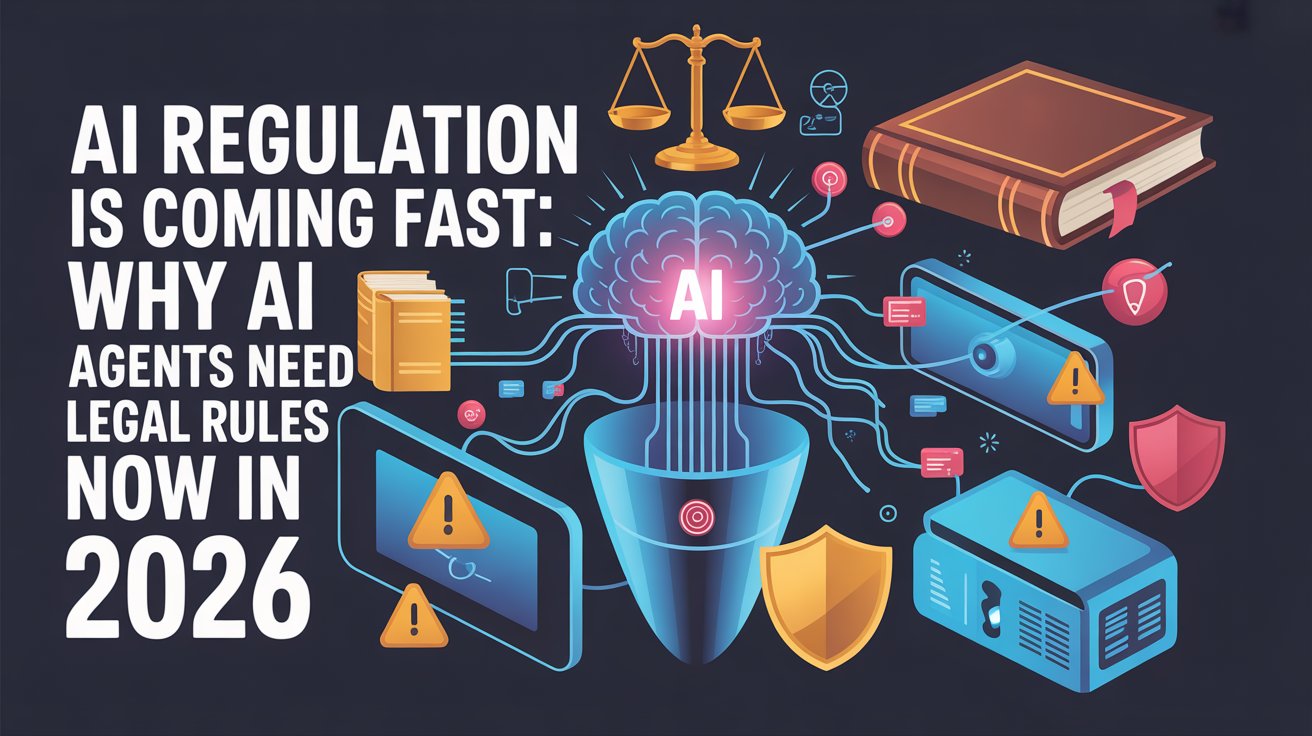
AI Regulation Is Coming Fast: Why AI Agents Need Legal Rules Now in 2026 : Artificial Intelligence is growing very fast, and one of the most powerful developments is the rise of AI agents. These systems can perform tasks automatically, make decisions, and interact with digital platforms without constant human control.
While this technology brings many benefits, it also creates serious concerns. As AI agents become more autonomous, questions about safety, privacy, and accountability are becoming more important.
This is why experts are saying that AI regulation is coming fast. Governments and organizations around the world are working on legal rules for AI agents to ensure they are used responsibly.
For freshers and beginners, understanding AI laws and regulations is becoming just as important as learning the technology itself.
In this article, we will explain why AI agents need legal rules, the risks involved, and what the future of AI regulation in 2026 looks like.
What Are AI Agents and Why Regulation Matters
An AI agent is a software system that can perform tasks automatically using Artificial Intelligence.
These agents can:
• Analyze data
• Make decisions
• Interact with tools and APIs
• Complete workflows independently
As these systems become more powerful, they are being used in business, healthcare, finance, and many other industries.
However, with this power comes responsibility. Without proper rules, AI agents can create serious problems such as misuse of data, wrong decisions, and lack of accountability.
This is why AI regulation and legal frameworks are becoming necessary.
Why AI Regulation Is Becoming Urgent
The rapid growth of AI technology in 2026 has made regulation a priority.
Increase in AI Adoption
Many companies are using AI automation systems in their daily operations.
Autonomous Decision-Making
AI agents can now make decisions without human approval, which increases risk.
Global Impact
AI systems are used worldwide, making regulation more complex.
Data Privacy Concerns
AI agents often handle sensitive user data, which needs protection.
Because of these reasons, governments are focusing on AI legal rules and compliance policies.
Risks of Unregulated AI Agents
Data Privacy Violations
AI agents often collect, store, and process large amounts of personal data such as names, emails, browsing behavior, and even financial information. If there are no strict regulations, this data can be misused, sold without consent, or exposed due to weak security systems.
For example, an AI agent handling customer data in a company could accidentally leak sensitive information if it is not properly secured. This can lead to identity theft, financial loss, and loss of user trust. Strong data protection laws are necessary to ensure that AI systems handle personal information responsibly.
Wrong Decision-Making
AI agents are trained on data, and if the data is incomplete, outdated, or incorrect, the decisions made by the AI can also be wrong. These errors can have serious consequences, especially in industries like healthcare, finance, or hiring.
For instance, an AI agent used for screening job applications might reject qualified candidates due to incorrect patterns in its training data. Similarly, in finance, a wrong prediction by an AI system can lead to major financial losses. This is why human oversight and validation systems are important.
Lack of Accountability
One of the biggest challenges with AI agents is deciding who is responsible when something goes wrong. Is it the developer who created the system, the company using it, or the AI itself?
Without proper legal rules, it becomes very difficult to assign responsibility. This can create confusion and delay problem resolution. Clear AI accountability frameworks are needed so that companies take responsibility for the actions of their AI systems.
Security Risks
AI systems can be targeted by hackers or used for malicious purposes. For example, attackers can manipulate AI models by feeding them incorrect data, which can change their behavior.
In some cases, AI agents themselves can be used to automate cyberattacks, phishing scams, or misinformation campaigns. Without proper security standards and monitoring, AI can become a tool for harmful activities instead of beneficial ones.
AI vs Traditional Job Search: What Works Better for Freshers in 2026?
Bias and Unfair Outcomes
AI models learn from historical data, and if that data contains bias, the AI system may also produce biased results. This can lead to unfair decisions in hiring, lending, or other important areas.
For example, an AI hiring system might favor certain groups over others if the training data is biased. This creates inequality and reduces trust in AI systems. Ensuring fairness and ethical AI practices is essential to avoid such issues.
Over-Automation and Loss of Human Control
As AI agents become more autonomous, there is a risk of relying too much on automation. Businesses may start depending heavily on AI systems without proper human supervision.
This can lead to situations where important decisions are made without human judgment. If something goes wrong, it may be difficult to quickly intervene. Maintaining a balance between AI automation and human control is very important.
Misinformation and Content Manipulation
AI agents can generate content such as text, images, and videos. While this is useful, it also creates the risk of spreading false information.
For example, AI can be used to create fake news, deepfake videos, or misleading content at a large scale. Without regulation, this can affect public opinion, elections, and social stability. This is why content regulation and verification systems are becoming necessary.
Economic and Job Impact
Unregulated AI adoption can also impact the job market. Many repetitive tasks can be automated, which may reduce certain job opportunities.
At the same time, new roles will be created, but without proper planning, the transition can be difficult for many people. Governments and companies need to focus on reskilling and upskilling programs to manage this shift.
Key Areas Where AI Needs Legal Rules
Data Protection Laws
AI systems rely heavily on data, especially personal and sensitive information. Without proper rules, this data can be misused, stored insecurely, or shared without user consent.
Legal frameworks are now focusing on ensuring that companies collect only necessary data, store it securely, and use it transparently. Users should also have control over their data, including the ability to access, update, or delete it.
Strong data protection laws help build trust between users and AI systems and reduce the risk of data breaches.
Transparency and Explainability
One major concern with AI agents is that many systems work like a “black box,” meaning people do not understand how decisions are made. This lack of transparency can create confusion and mistrust.
Regulations now emphasize that AI systems should provide clear explanations for their decisions, especially in critical areas like hiring, healthcare, and finance.
For example, if an AI rejects a job application, it should explain why. This concept of explainable AI (XAI) helps users understand and trust AI systems.
Accountability and Responsibility
When an AI system makes a mistake, it is important to know who is responsible. Without clear rules, companies may avoid taking responsibility for errors caused by their AI systems.
Legal frameworks are now focusing on defining accountability. Companies that develop or use AI must ensure that their systems are properly tested, monitored, and maintained.
This means businesses cannot simply blame the AI—they must take responsibility for its actions. Clear accountability laws help ensure fairness and faster problem resolution.
How Governments Are Responding to AI Growth
Governments around the world are working on AI laws and regulations.
Policy Development
Countries are creating policies to control how AI is developed and used.
Industry Guidelines
Organizations are setting standards for ethical AI development.
Compliance Requirements
Companies must follow rules related to data protection and transparency.
International Cooperation
Since AI is global, countries are working together to create common standards.
This shows that AI regulation is not a future concept—it is already happening.
From Chatbots to Autonomous AI Agents: The Next Evolution of AI in 2026
Challenges in Regulating AI Agents
Creating laws for AI is not easy. There are several challenges.
Rapid Technological Change
AI technology evolves faster than regulations can keep up.
Complexity of AI Systems
AI agents are complex, making it difficult to create simple rules.
Global Differences
Different countries have different laws and policies.
Balancing Innovation and Control
Too many regulations can slow down innovation, while too few can create risks.
These challenges make AI governance a complex but necessary task.
Why Freshers Should Understand AI Regulations
Many freshers focus only on learning technical skills. However, understanding AI laws and ethics is equally important.
Career Opportunities
Companies are hiring professionals who understand both AI technology and regulations.
Responsible Development
Developers must ensure that AI systems are safe and ethical.
Future-Proof Skills
Knowledge of AI compliance and policies will be valuable in the future job market.
Better Decision Making
Understanding regulations helps professionals build better and safer AI systems.
Because of these reasons, learning about AI regulation in 2026 is essential.
Future of AI Laws and Policies
The future of AI regulation will focus on creating a balance between innovation and safety.
Stronger Legal Frameworks
Governments will introduce more detailed AI laws.
Global AI Standards
International organizations may create common AI rules.
Ethical AI Development
Companies will focus more on fairness and transparency.
Human-AI Collaboration
AI systems will work alongside humans with proper supervision.
As AI continues to grow, legal rules will play a major role in shaping its future.
FAQs
Why is AI regulation important?
AI regulation ensures that AI systems are safe, ethical, and used responsibly.
Are AI agents dangerous without rules?
Without proper rules, AI agents can cause privacy issues, wrong decisions, and security risks.
Will AI regulations slow down innovation?
Good regulations aim to balance innovation and safety.
Should freshers learn about AI laws?
Yes, understanding AI regulations can provide a strong career advantage.
Conclusion
The rapid rise of AI agents and automation systems has created new opportunities as well as new challenges.
While these technologies can improve productivity and efficiency, they also raise concerns about privacy, security, and accountability.
This is why AI regulation is becoming essential in 2026. Governments and organizations are working to create rules that ensure AI is used safely and responsibly.
For freshers and professionals, understanding both AI technology and legal frameworks will be important for future success.
As AI continues to evolve, those who understand both innovation and regulation will be best prepared for the future.