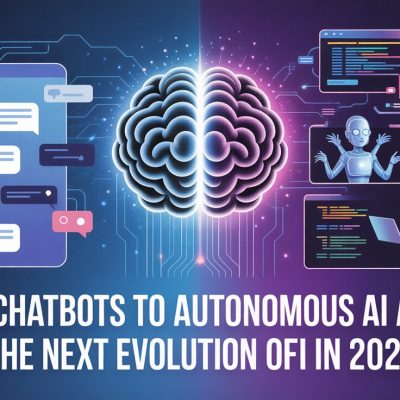
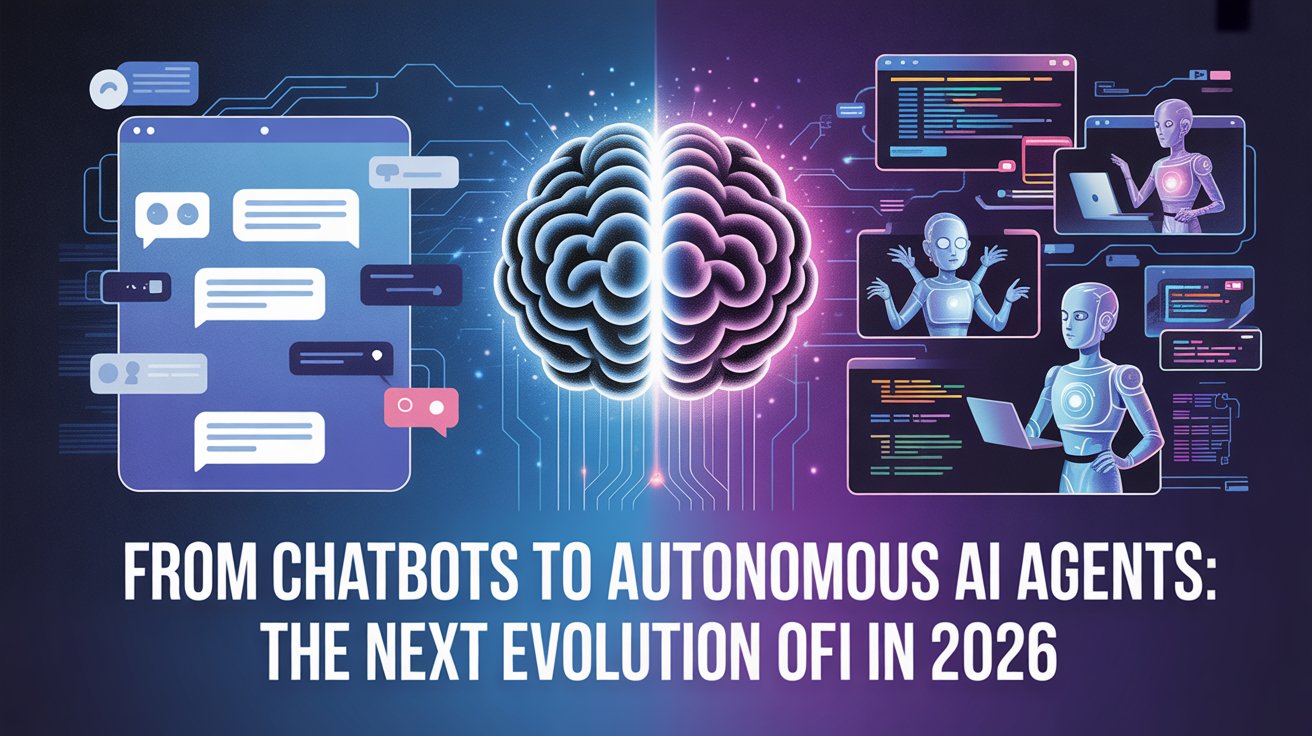
From Chatbots to Autonomous AI Agents: The Next Evolution of AI in 2026 : Artificial Intelligence is evolving very fast. A few years ago, most people interacted with AI chatbots that could answer questions or help with simple tasks. These chatbots were useful, but they had many limitations.
Today, we are moving toward a new generation of technology called autonomous AI agents. These agents can perform complex tasks, analyze information, and make decisions with very little human involvement.
This shift from From Chatbots to Autonomous AI Agents: The Next Evolution of AI in 2026 represents the next evolution of AI technology.
Many companies are already using AI agents to automate workflows, improve productivity, and handle complex business processes.
For freshers and beginners entering the tech industry, understanding this transformation is very important. Learning how AI agents work and how they are different from traditional chatbots can help you stay ahead in the rapidly changing AI landscape.
The Evolution of AI Technology
Artificial Intelligence has gone through several stages of development.
Initially, computers were programmed with rule-based systems. These systems could only follow predefined instructions and could not learn or adapt.
Later, AI chatbots became popular. These bots could understand human language and respond to questions. Many businesses started using chatbots for customer support and basic assistance.
However, chatbots were mostly reactive systems. They responded to queries but could not perform complex tasks or make independent decisions.
Now we are entering a new era where AI agents can plan, execute, and complete tasks automatically.
This evolution is possible because of advancements in:
• Large Language Models (LLMs)
• Machine learning algorithms
• Cloud computing
• Automation frameworks
These technologies have enabled AI systems to become more intelligent and capable.
What Are AI Chatbots
An AI chatbot is a software application designed to simulate conversation with human users.
Chatbots are commonly used in customer service, websites, and messaging platforms.
For example, when you visit a website and see a small chat window asking “How can I help you today?”, that is usually an AI chatbot.
Features of AI Chatbots
Automated Conversations
Chatbots can interact with users and answer questions in real time.
Customer Support Assistance
Businesses use chatbots to handle common customer queries.
Information Retrieval
Chatbots can provide product details, FAQs, and service information.
Although chatbots are useful, they mainly focus on communication rather than task execution.
Using AI to Analyze Job Descriptions and Increase Selection Chances in 2026
What Are Autonomous AI Agents
An autonomous AI agent is an advanced AI system that can perform tasks independently.
Instead of simply answering questions, these agents can analyze goals, plan actions, and execute tasks automatically.
For example, an AI agent could:
• Research market trends
• Collect and analyze data
• Generate reports
• Automate workflows
This ability to perform multi-step tasks makes AI agents far more powerful than traditional chatbots.
Key Differences Between Chatbots and AI Agents
Understanding the difference between AI chatbots and AI agents helps explain why AI agents are considered the next evolution of AI.
| Feature | AI Chatbots | AI Agents |
|---|---|---|
| Purpose | Answer questions | Complete tasks |
| Interaction | Reactive | Proactive |
| Complexity | Simple conversations | Multi-step workflows |
| Decision Making | Limited | Advanced reasoning |
| Automation | Basic | High-level automation |
Because of these capabilities, businesses are increasingly investing in AI agent technologies.
How AI Agents Work
AI agents follow a structured process to complete tasks efficiently. Unlike traditional software programs that only follow fixed instructions, AI agents can understand goals, plan actions, execute tasks, and sometimes learn from the results. This step-by-step process allows them to perform complex tasks with minimal human involvement.
Goal Understanding
The first step for any AI agent is understanding the goal it needs to achieve. A user or system provides an instruction such as analyzing data, generating a report, or finding specific information online.
The AI agent reads and interprets this instruction using natural language processing and machine learning models. It then determines the objective and the type of outcome expected. This step is important because a clear understanding of the goal helps the agent decide the best strategy to complete the task.
Task Planning
Once the goal is understood, the AI agent begins planning how to achieve it. Instead of trying to complete the entire task at once, the agent breaks the main objective into smaller and manageable steps.
For example, if the goal is to create a research report, the agent may divide the task into steps like collecting information, analyzing the data, summarizing insights, and generating the final report.
This planning phase allows the agent to organize its workflow and determine which tools, data sources, or processes are required.
Action Execution
After creating a plan, the AI agent starts performing the tasks step by step. During this stage, the agent interacts with different systems or tools to complete the work.
For example, the agent may search the internet for information, analyze datasets, generate written content, or interact with software applications. Some advanced agents can even call APIs or access databases to gather additional information.
By executing these actions sequentially, the AI agent gradually moves closer to completing the original objective.
Learning from Results
Some advanced AI agents have the ability to evaluate the results of their actions. After completing a task, the system can analyze whether the outcome matches the expected goal.
If the result is not accurate or complete, the agent may adjust its strategy and try a different approach. Over time, this process helps improve performance and decision-making.
This ability to analyze outcomes and improve future actions makes AI agents more intelligent and efficient compared to traditional automation systems.
Why This Process Makes AI Agents Powerful
The combination of goal understanding, task planning, action execution, and learning from results allows AI agents to handle complex workflows that previously required human effort.
Instead of performing only one simple action, AI agents can manage multi-step processes and adapt to different situations. This is why businesses and technology companies are increasingly using AI agents for automation, research, and decision-making tasks.
AI Agents Are Transforming Businesses in 2026 : What You Need to Know
Real-World Applications of AI Agents
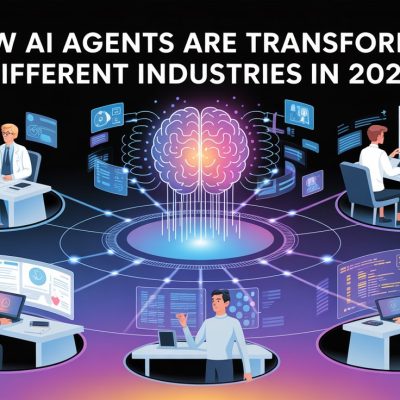
AI agents are already transforming many industries.
Customer Support
AI agents can handle thousands of customer queries simultaneously.
Marketing Automation
Companies use AI agents to analyze customer behavior and optimize campaigns.
Data Analysis
AI agents can process large amounts of data and generate insights.
Software Development
Developers use AI agents to assist with coding, debugging, and documentation.
These applications show how AI agents are reshaping modern industries.
Benefits of AI Agents for Businesses
AI agents offer several advantages to companies.
Increased Productivity
Automation helps businesses complete tasks faster.
Cost Reduction
AI systems reduce the need for manual work.
Improved Decision Making
AI agents analyze large datasets and provide insights.
Scalability
Businesses can handle more work without increasing staff.
These benefits explain why AI automation is growing rapidly across industries.
Challenges and Limitations of AI Agents
Despite their advantages, AI agents also have some challenges.
Data Dependence
AI systems require large amounts of data to function effectively.
Security Concerns
Automation systems must be designed carefully to avoid security risks.
Ethical Issues
Organizations must ensure AI systems are used responsibly.
Understanding these challenges is important for the responsible development of AI technologies.
Why Freshers Should Learn About AI Agents
Learning about AI agents and automation systems can provide major career benefits.
High Demand Skills
Companies are actively looking for professionals with AI knowledge.
Innovation Opportunities
AI agents allow developers to build powerful applications.
Career Growth
Understanding AI technologies can open new career paths.
Freshers who learn about AI automation systems early will have a strong advantage.
Future of Autonomous AI Agents
The future of AI agents looks extremely promising.
In the coming years, AI agents may become digital assistants capable of managing complex workflows across organizations.
Future AI agents may:
• Coordinate business operations
• Analyze large business datasets
• Assist professionals in decision-making
• Manage intelligent automation systems
As technology evolves, AI agents will play a major role in the future of work.
FAQs
What is the difference between AI chatbots and AI agents?
Chatbots mainly respond to questions, while AI agents can perform tasks and make decisions independently.
Are AI agents replacing chatbots?
AI agents are expanding the capabilities of chatbots rather than replacing them.
Why are AI agents important in 2026?
AI agents help automate complex workflows and improve productivity.
Can beginners learn about AI agents?
Yes, many learning resources and frameworks help beginners understand AI agent technology.
Conclusion
The transition from AI chatbots to autonomous AI agents represents a major evolution in Artificial Intelligence.
While chatbots helped automate conversations, AI agents are now capable of performing complex tasks and managing workflows independently.
Businesses across industries are adopting AI automation technologies to improve productivity and efficiency.
For freshers and professionals entering the tech industry, understanding AI agents and their capabilities will be extremely valuable.
As AI continues to evolve, autonomous agents will become an essential part of modern technology and business systems.