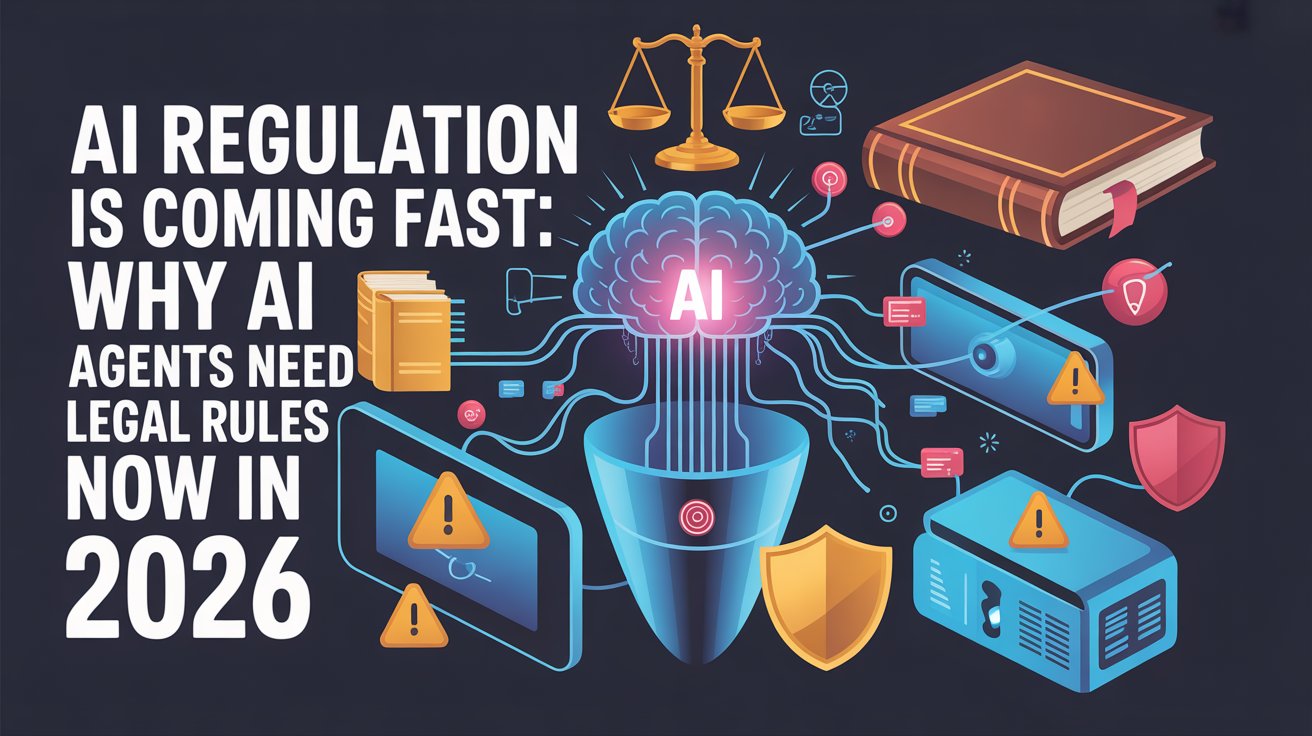
AI Regulation Is Coming Fast: Why AI Agents Need Legal Rules Now in 2026 : Artificial Intelligence is growing very fast, and one of the most powerful developments is the rise of AI agents. These systems can perform tasks automatically, make decisions, and interact with digital platforms without constant human control. While this technology brings many benefits, it also creates serious concerns. As AI agents become more autonomous, questions about safety, privacy, and accountability are becoming more important. This is why experts are saying that AI regulation is coming fast. Governments and organizations around the world are working on legal rules for AI agents to ensure they are used responsibly. For freshers and beginners, understanding AI laws and regulations is becoming just as important as learning the technology itself. In this article, we will explain why AI agents need legal rules, the risks involved, and what the future of AI regulation in 2026 looks like. What Are AI Agents and Why Regulation Matters An AI agent is a software system that can perform tasks automatically using Artificial Intelligence. These agents can: • Analyze data• Make decisions• Interact with tools and APIs• Complete workflows independently As these systems become more powerful, they are being used in business, healthcare, finance, and many other industries. However, with this power comes responsibility. Without proper rules, AI agents can create serious problems such as misuse of data, wrong decisions, and lack of accountability. This is why AI regulation and legal frameworks are becoming necessary. Why AI Regulation Is Becoming Urgent The rapid growth of AI technology in 2026 has made regulation a priority. Increase in AI Adoption Many companies are using AI automation systems in their daily operations. Autonomous Decision-Making AI agents can now make decisions without human approval, which increases risk. Global Impact AI systems are used worldwide, making regulation more complex. Data Privacy Concerns AI agents often handle sensitive user data, which needs protection. Because of these reasons, governments are focusing on AI legal rules and compliance policies. Risks of Unregulated AI Agents Data Privacy Violations AI agents often collect, store, and process large amounts of personal data such as names, emails, browsing behavior, and even financial information. If there are no strict regulations, this data can be misused, sold without consent, or exposed due to weak security systems. For example, an AI agent handling customer data in a company could accidentally leak sensitive information if it is not properly secured. This can lead to identity theft, financial loss, and loss of user trust. Strong data protection laws are necessary to ensure that AI systems handle personal information responsibly. Wrong Decision-Making AI agents are trained on data, and if the data is incomplete, outdated, or incorrect, the decisions made by the AI can also be wrong. These errors can have serious consequences, especially in industries like healthcare, finance, or hiring. For instance, an AI agent used for screening job applications might reject qualified candidates due to incorrect patterns in its training data. Similarly, in finance, a wrong prediction by an AI system can lead to major financial losses. This is why human oversight and validation systems are important. Lack of Accountability One of the biggest challenges with AI agents is deciding who is responsible when something goes wrong. Is it the developer who created the system, the company using it, or the AI itself? Without proper legal rules, it becomes very difficult to assign responsibility. This can create confusion and delay problem resolution. Clear AI accountability frameworks are needed so that companies take responsibility for the actions of their AI systems. Security Risks AI systems can be targeted by hackers or used for malicious purposes. For example, attackers can manipulate AI models by feeding them incorrect data, which can change their behavior. In some cases, AI agents themselves can be used to automate cyberattacks, phishing scams, or misinformation campaigns. Without proper security standards and monitoring, AI can become a tool for harmful activities instead of beneficial ones. AI vs Traditional Job Search: What Works Better for Freshers in 2026? Bias and Unfair Outcomes AI models learn from historical data, and if that data contains bias, the AI system may also produce biased results. This can lead to unfair decisions in hiring, lending, or other important areas. For example, an AI hiring system might favor certain groups over others if the training data is biased. This creates inequality and reduces trust in AI systems. Ensuring fairness and ethical AI practices is essential to avoid such issues. Over-Automation and Loss of Human Control As AI agents become more autonomous, there is a risk of relying too much on automation. Businesses may start depending heavily on AI systems without proper human supervision. This can lead to situations where important decisions are made without human judgment. If something goes wrong, it may be difficult to quickly intervene. Maintaining a balance between AI automation and human control is very important. Misinformation and Content Manipulation AI agents can generate content such as text, images, and videos. While this is useful, it also creates the risk of spreading false information. For example, AI can be used to create fake news, deepfake videos, or misleading content at a large scale. Without regulation, this can affect public opinion, elections, and social stability. This is why content regulation and verification systems are becoming necessary. Economic and Job Impact Unregulated AI adoption can also impact the job market. Many repetitive tasks can be automated, which may reduce certain job opportunities. At the same time, new roles will be created, but without proper planning, the transition can be difficult for many people. Governments and companies need to focus on reskilling and upskilling programs to manage this shift. Key Areas Where AI Needs Legal Rules Data Protection Laws AI systems rely heavily on data, especially personal and sensitive information. Without proper rules, this data can be misused, stored insecurely, or shared without user consent. Legal frameworks are now focusing on ensuring that companies collect only
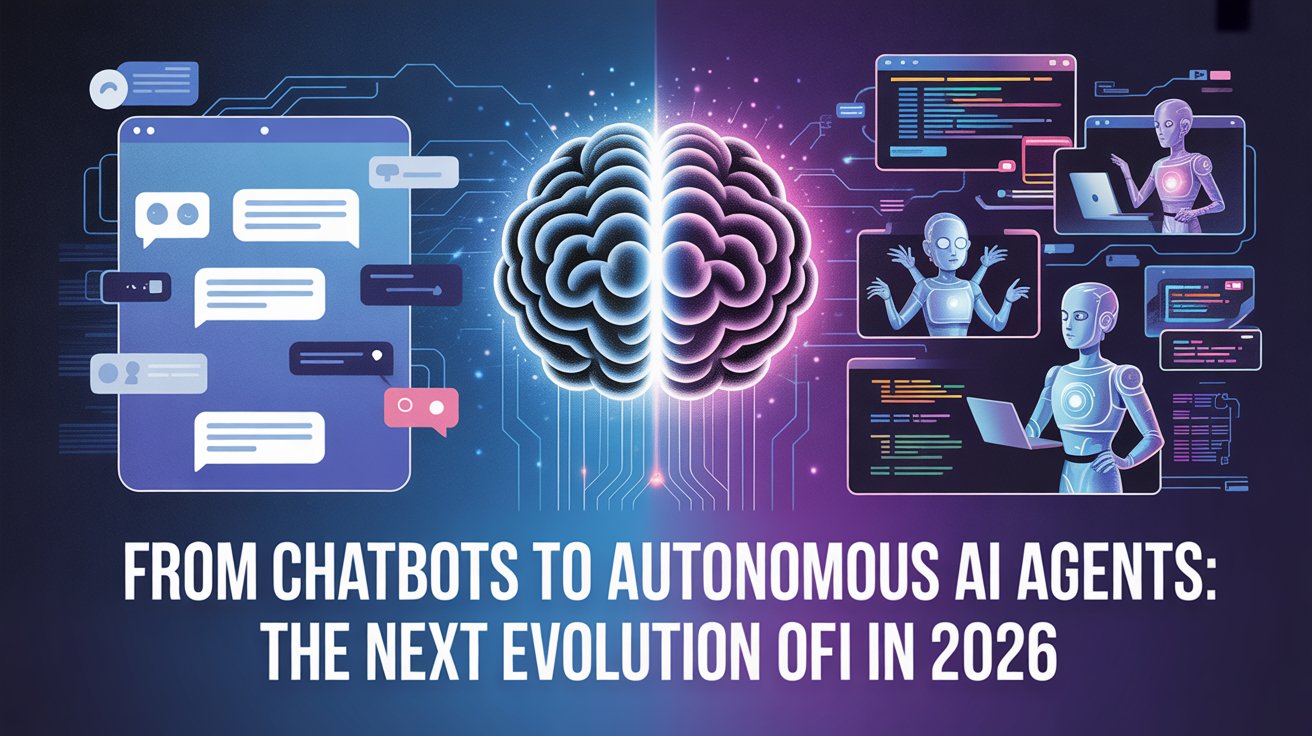
From Chatbots to Autonomous AI Agents: The Next Evolution of AI in 2026
From Chatbots to Autonomous AI Agents: The Next Evolution of AI in 2026 : Artificial Intelligence is evolving very fast. A few years ago, most people interacted with AI chatbots that could answer questions or help with simple tasks. These chatbots were useful, but they had many limitations. Today, we are moving toward a new generation of technology called autonomous AI agents. These agents can perform complex tasks, analyze information, and make decisions with very little human involvement. This shift from From Chatbots to Autonomous AI Agents: The Next Evolution of AI in 2026 represents the next evolution of AI technology. Many companies are already using AI agents to automate workflows, improve productivity, and handle complex business processes. For freshers and beginners entering the tech industry, understanding this transformation is very important. Learning how AI agents work and how they are different from traditional chatbots can help you stay ahead in the rapidly changing AI landscape. The Evolution of AI Technology Artificial Intelligence has gone through several stages of development. Initially, computers were programmed with rule-based systems. These systems could only follow predefined instructions and could not learn or adapt. Later, AI chatbots became popular. These bots could understand human language and respond to questions. Many businesses started using chatbots for customer support and basic assistance. However, chatbots were mostly reactive systems. They responded to queries but could not perform complex tasks or make independent decisions. Now we are entering a new era where AI agents can plan, execute, and complete tasks automatically. This evolution is possible because of advancements in: • Large Language Models (LLMs)• Machine learning algorithms• Cloud computing• Automation frameworks These technologies have enabled AI systems to become more intelligent and capable. What Are AI Chatbots An AI chatbot is a software application designed to simulate conversation with human users. Chatbots are commonly used in customer service, websites, and messaging platforms. For example, when you visit a website and see a small chat window asking “How can I help you today?”, that is usually an AI chatbot. Features of AI Chatbots Automated Conversations Chatbots can interact with users and answer questions in real time. Customer Support Assistance Businesses use chatbots to handle common customer queries. Information Retrieval Chatbots can provide product details, FAQs, and service information. Although chatbots are useful, they mainly focus on communication rather than task execution. Using AI to Analyze Job Descriptions and Increase Selection Chances in 2026 What Are Autonomous AI Agents An autonomous AI agent is an advanced AI system that can perform tasks independently. Instead of simply answering questions, these agents can analyze goals, plan actions, and execute tasks automatically. For example, an AI agent could: • Research market trends• Collect and analyze data• Generate reports• Automate workflows This ability to perform multi-step tasks makes AI agents far more powerful than traditional chatbots. Key Differences Between Chatbots and AI Agents Understanding the difference between AI chatbots and AI agents helps explain why AI agents are considered the next evolution of AI. Feature AI Chatbots AI Agents Purpose Answer questions Complete tasks Interaction Reactive Proactive Complexity Simple conversations Multi-step workflows Decision Making Limited Advanced reasoning Automation Basic High-level automation Because of these capabilities, businesses are increasingly investing in AI agent technologies. How AI Agents Work AI agents follow a structured process to complete tasks efficiently. Unlike traditional software programs that only follow fixed instructions, AI agents can understand goals, plan actions, execute tasks, and sometimes learn from the results. This step-by-step process allows them to perform complex tasks with minimal human involvement. Goal Understanding The first step for any AI agent is understanding the goal it needs to achieve. A user or system provides an instruction such as analyzing data, generating a report, or finding specific information online. The AI agent reads and interprets this instruction using natural language processing and machine learning models. It then determines the objective and the type of outcome expected. This step is important because a clear understanding of the goal helps the agent decide the best strategy to complete the task. Task Planning Once the goal is understood, the AI agent begins planning how to achieve it. Instead of trying to complete the entire task at once, the agent breaks the main objective into smaller and manageable steps. For example, if the goal is to create a research report, the agent may divide the task into steps like collecting information, analyzing the data, summarizing insights, and generating the final report. This planning phase allows the agent to organize its workflow and determine which tools, data sources, or processes are required. Action Execution After creating a plan, the AI agent starts performing the tasks step by step. During this stage, the agent interacts with different systems or tools to complete the work. For example, the agent may search the internet for information, analyze datasets, generate written content, or interact with software applications. Some advanced agents can even call APIs or access databases to gather additional information. By executing these actions sequentially, the AI agent gradually moves closer to completing the original objective. Learning from Results Some advanced AI agents have the ability to evaluate the results of their actions. After completing a task, the system can analyze whether the outcome matches the expected goal. If the result is not accurate or complete, the agent may adjust its strategy and try a different approach. Over time, this process helps improve performance and decision-making. This ability to analyze outcomes and improve future actions makes AI agents more intelligent and efficient compared to traditional automation systems. Why This Process Makes AI Agents Powerful The combination of goal understanding, task planning, action execution, and learning from results allows AI agents to handle complex workflows that previously required human effort. Instead of performing only one simple action, AI agents can manage multi-step processes and adapt to different situations. This is why businesses and technology companies are increasingly using AI agents for automation, research, and decision-making tasks. AI Agents Are Transforming Businesses
AI Agents Are Transforming Businesses in 2026 : What You Need to Know
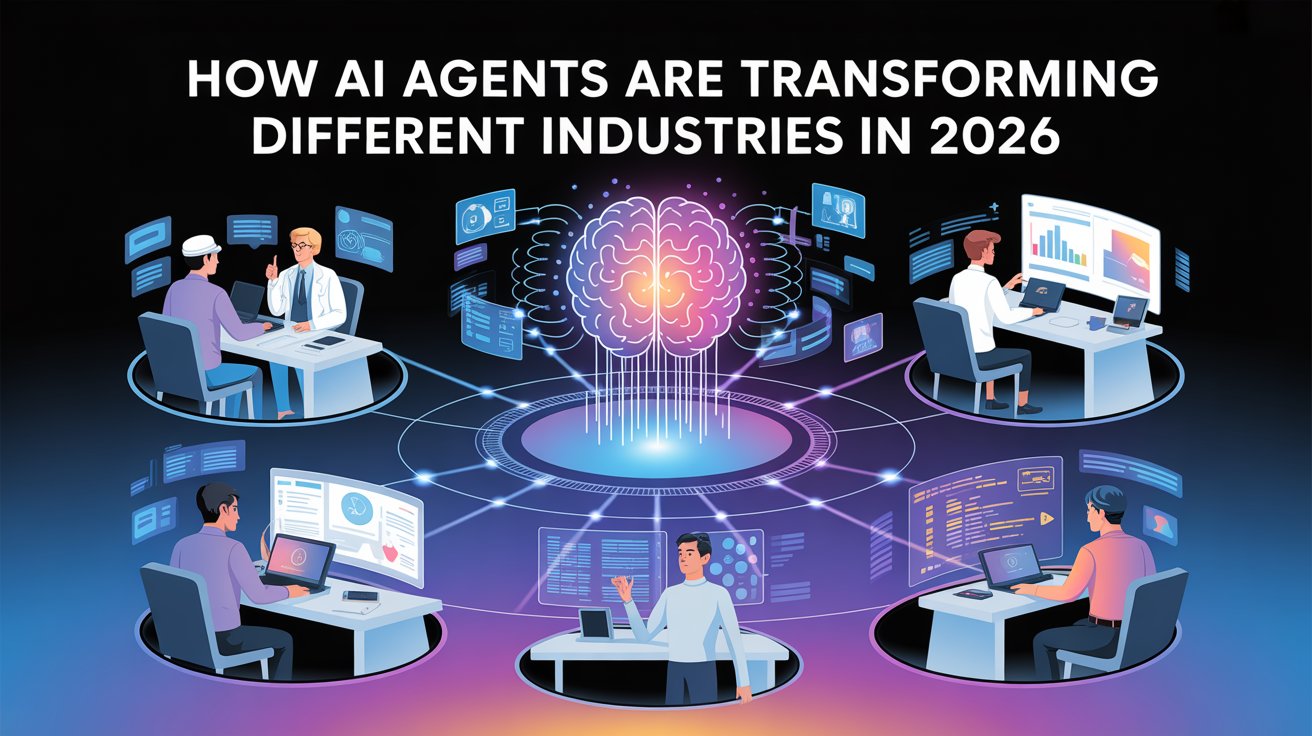
Artificial Intelligence is evolving rapidly, and one of the biggest breakthroughs in recent years is the rise of AI Agents Are Transforming Businesses in 2026. These intelligent systems are capable of performing tasks automatically, making decisions, and interacting with software tools without constant human guidance. In 2026, AI agents are transforming businesses across industries. Companies are using these systems to automate customer service, analyze data, manage workflows, and even assist in software development. For freshers entering the job market, understanding AI agents and automation tools is becoming extremely important. Many organizations are actively hiring professionals who understand AI-powered automation systems and know how to use them effectively. In this article, we will explain what AI agents are, how they work, how businesses are using them, and why freshers should learn about this technology in 2026. What Are AI Agents An AI agent is a software system that can perform tasks automatically using Artificial Intelligence. Unlike traditional software programs, AI agents can understand instructions, analyze data, and make decisions based on goals. For example, a business might use an AI agent to: • Answer customer queries automatically• Analyze sales data• Generate reports• Monitor business processes These systems often use large language models, machine learning, and automation tools to complete tasks efficiently. Instead of humans doing repetitive work, AI automation agents can perform these tasks faster and more accurately. Why AI Agents Are Important for Businesses Businesses are always looking for ways to increase efficiency and reduce operational costs. This is one reason why AI agents for business automation are becoming very popular. AI agents can work 24/7 without breaks and handle thousands of tasks simultaneously. This allows companies to improve productivity and focus human employees on more creative and strategic work. Key Reasons Businesses Are Adopting AI Agents Automation of Repetitive Tasks Many business tasks such as data entry, report generation, and email responses are repetitive. AI agents can automate these tasks easily. Faster Decision Making AI agents can analyze large datasets quickly and provide insights that help businesses make better decisions. Improved Customer Experience Companies use AI customer service agents to respond to customer questions instantly. Cost Efficiency Automation reduces the need for manual labor in certain processes, saving money for businesses. Because of these advantages, AI agents are becoming an essential technology for modern companies. How AI Agents Are Transforming Different Industries AI agents are now being used in many industries to improve efficiency and productivity. AI Agents in Customer Support Many companies now use AI chatbots and virtual assistants to handle customer queries. These systems can answer common questions, track orders, and provide support 24/7. AI agents reduce waiting time and improve the overall customer experience. I Used AI to Apply for 100 Jobs – Here’s What Happened in 2026 AI Agents in Marketing Marketing teams use AI agents to analyze customer data and create personalized campaigns. These agents can monitor social media, analyze trends, and recommend marketing strategies. This helps businesses reach the right audience more effectively. AI Agents in Finance In the finance industry, AI agents are used for tasks such as fraud detection and financial analysis. They can analyze large amounts of transaction data and identify unusual patterns quickly. This improves security and helps financial institutions manage risk. AI Agents in Software Development Developers use AI agents to assist with coding, debugging, and documentation. These tools can suggest code improvements, generate functions, and identify errors. This speeds up the software development process. Popular AI Agent Platforms Businesses Use Many platforms allow businesses to create and deploy AI-powered agents. Below are some well-known platforms used in modern AI development. 1. LangChain – AI Application Framework Website: https://www.langchain.com LangChain is one of the most widely used frameworks for building AI-powered applications and agents. It allows developers to connect large language models with databases, APIs, and external tools. Key Features • AI workflow automation• Integration with APIs• Memory and context management• Agent-based task execution Many companies use LangChain to build advanced AI automation solutions. 2. CrewAI – Multi-Agent Collaboration Platform Website: https://www.crewai.com CrewAI allows developers to create systems where multiple AI agents work together as a team. Each agent has a specific role and can collaborate with others to complete complex tasks. Key Features • Multi-agent collaboration• Task delegation between agents• Automated workflows• Scalable AI architecture This platform helps companies build complex AI-powered systems. Using AI to Analyze Job Descriptions and Increase Selection Chances in 2026 3. AutoGPT – Autonomous AI Agent Website: https://github.com/Significant-Gravitas/AutoGPT AutoGPT is an open-source project that demonstrates how autonomous AI agents can complete tasks independently. Users can provide a goal, and the AI agent will plan and execute tasks to achieve that goal. Key Features • Goal-based automation• Autonomous task execution• Open-source development• AI planning and reasoning This platform is often used for experimenting with advanced AI automation systems. Benefits of AI Agents for Companies AI agents offer several advantages for businesses. Increased Productivity AI systems can perform tasks much faster than humans. Improved Accuracy Automation reduces the risk of human errors. Scalability AI agents can handle large volumes of work without additional resources. Data-Driven Insights AI agents analyze data and provide valuable insights for decision-making. These benefits explain why AI agents are transforming modern businesses. Skills Freshers Should Learn for AI Agent Technology Freshers who want to work with AI agent systems should start learning some important skills. Programming Knowledge Languages such as Python and JavaScript are commonly used in AI development. Understanding APIs Many AI agents interact with external tools using APIs. Machine Learning Basics Understanding machine learning concepts helps in building intelligent systems. Automation Platforms Learning platforms like LangChain and CrewAI can help freshers build practical projects. Developing these skills will help candidates prepare for future AI-related job roles. Future of AI Agents in Business The future of AI agents in business looks very promising. Experts believe that AI agents will soon become digital assistants capable of managing entire business processes. We may see AI agents that: • Manage company
Top 5 AI Agent Tools Every Fresher Should Know in 2026
Top 5 AI Agent Tools Every Fresher Should Know in 2026 : Artificial Intelligence is changing the way people work, learn, and build software. One of the biggest trends in AI today is the rise of AI agents. These agents are intelligent systems that can perform tasks automatically, make decisions, and interact with other tools. For freshers entering the tech industry, learning about AI agent tools is becoming extremely important. Many companies are now building AI-powered automation systems that can handle tasks such as data analysis, customer support, research, and coding. The good news is that you don’t need to be an expert to start learning about AI agents. Many platforms provide beginner-friendly tools that help you build and experiment with AI automation workflows. In this article, we will explore the Top 5 AI agent tools every fresher should know, how these tools work, and how they can help you build valuable skills for the future. What Are AI Agents An AI agent is a software system that can perform tasks automatically using Artificial Intelligence. Instead of requiring constant human instructions, AI agents can: • Understand goals• Plan actions• Execute tasks• Learn from results For example, an AI agent can automatically search for information, write content, analyze data, or interact with APIs. Many modern applications now use AI agents for automation, making them an important skill for developers and tech professionals. Why Freshers Should Learn AI Agent Tools Learning AI agent development tools can provide many advantages for freshers. Growing Industry Demand Many companies are building AI-powered systems and need professionals who understand AI automation workflows. Productivity Improvement AI agents can automate repetitive tasks such as research, coding, and data processing. Career Opportunities Knowledge of AI tools and automation platforms can help candidates stand out during job interviews. Hands-on Learning Many AI agent tools allow beginners to experiment and build simple projects. Because of these reasons, learning AI agent platforms is becoming an important skill for freshers in 2026. Top 5 AI Agent Tools Every Fresher Should Know in 2026 Below are some of the most popular AI agent tools that beginners can explore. 1. AutoGPT – Autonomous AI Agent Website: https://github.com/Significant-Gravitas/AutoGPT AutoGPT is one of the first open-source projects that introduced the concept of autonomous AI agents. It uses powerful language models to automatically plan tasks and execute them without constant human input. For example, you can give AutoGPT a goal like: “Research trending AI tools and create a report.” The AI agent will then break the task into smaller steps and complete them. Key Features • Autonomous task execution• Goal-based automation• Integration with APIs• Open-source development AutoGPT is a great tool for understanding how AI agents perform complex tasks automatically. 2. LangChain – AI Agent Development Framework Website: https://www.langchain.com LangChain is one of the most popular frameworks for building AI-powered applications and agents. It allows developers to connect language models with external tools such as databases, APIs, and search engines. Using LangChain, developers can create AI agents that perform multi-step reasoning and decision-making. Key Features • AI workflow orchestration• Tool integration• Memory management• Agent-based architecture Many companies use LangChain to build advanced AI automation systems. Top 10 AI Tools to Crack Interviews Easily in 2026 3. CrewAI – Multi-Agent Collaboration Framework Website: https://www.crewai.com CrewAI is a modern platform that allows developers to build systems where multiple AI agents work together as a team. Each agent has a specific role and responsibility. For example: • One agent collects data• Another agent analyzes information• A third agent generates reports This approach makes AI systems more powerful and scalable. Key Features • Multi-agent collaboration• Task delegation• Workflow automation• Modular agent design CrewAI is becoming very popular for building agent-based AI applications. 4. Flowise – Visual AI Agent Builder Website: https://flowiseai.com Flowise is a visual platform that allows users to build AI workflows using a drag-and-drop interface. This makes it easier for beginners who do not have strong coding skills. Users can connect AI models, APIs, and data sources to create intelligent applications. Key Features • Visual workflow builder• Drag-and-drop interface• Integration with AI models• Easy deployment Flowise is one of the best AI agent tools for beginners. 5. Relevance AI – AI Automation Platform Website: https://relevanceai.com Relevance AI is an AI platform designed for building automation tools and AI agents that handle complex workflows. It allows users to automate tasks such as document processing, data analysis, and research. Many businesses use this platform to build AI-powered productivity tools. Key Features • AI workflow automation• Data analysis capabilities• AI agent customization• Integration with external tools This platform helps developers create powerful AI automation solutions. How Freshers Can Use AI to Write Cover Letters That Get Responses in 2026 How AI Agents Are Used in Real-World Applications AI agents are already being used in many industries. Customer Support AI agents can automatically answer customer questions and solve common problems. Research and Data Analysis AI agents can collect and analyze information from multiple sources. Content Creation AI agents can generate articles, reports, and summaries. Software Development Developers use AI agents to assist with coding, debugging, and documentation. Because of these applications, the demand for AI automation experts is increasing. How Freshers Can Start Learning AI Agents If you want to learn AI agent development, you can start with a few simple steps. Step 1: Learn Basic AI Concepts Understand how AI models and machine learning systems work. Step 2: Explore AI Agent Platforms Experiment with tools like LangChain and Flowise. Step 3: Build Small Projects Create simple automation workflows to understand agent behavior. Step 4: Learn APIs and Integrations Many AI agents interact with external tools through APIs. Practicing these skills will help freshers build real-world experience. Future of AI Agents in the Tech Industry The future of AI agents looks very promising. In the coming years, we will see: • More advanced autonomous systems• AI-powered digital assistants• Automated business workflows• AI-driven decision-making tools Many companies are investing heavily in AI agent technology,
How Freshers Can Use AI to Write Cover Letters That Get Responses in 2026
How Freshers Can Use AI to Write Cover Letters That Get Responses in 2026 : Getting a job as a fresher is not only about having the right skills. Many candidates have good knowledge but still do not receive interview calls. One major reason is that they send job applications without a proper cover letter. A cover letter is a short document that explains why you are the right candidate for a job. It allows you to introduce yourself, highlight your skills, and show your interest in the company. However, many freshers struggle with writing cover letters because they don’t know what to write or how to structure it. This is where AI tools for cover letter writing become very helpful. Today, Artificial Intelligence can help job seekers create professional cover letters quickly. Using AI cover letter generators, candidates can write personalized and ATS-friendly cover letters that increase the chances of getting responses from recruiters. In this article, we will explain how freshers can use AI to write powerful cover letters, the best AI tools for cover letter writing, and practical tips to improve your job application success rate. What is a Cover Letter and Why It Matters A cover letter is a short document that you send along with your resume when applying for a job. It explains: • Who you are• Why you are interested in the job• What skills you bring to the company Recruiters often read cover letters to understand the candidate’s motivation and communication skills. A strong cover letter for job applications can make a big difference because it shows the recruiter that you have taken the time to personalize your application. Why Freshers Struggle to Write Cover Letters Many freshers skip cover letters or write very generic ones. This reduces their chances of getting interview calls. Here are some common problems: • Not knowing what to write• Writing very long paragraphs• Copy-pasting the same cover letter everywhere• Not connecting skills with job requirements• Poor grammar and formatting Because of these challenges, many candidates now use AI cover letter writing tools. How AI Helps Write Better Cover Letters Artificial Intelligence can analyze job descriptions and help candidates create personalized cover letters. Using AI tools for job applications, candidates can generate high-quality cover letters in minutes. Benefits of Using AI for Cover Letters Faster Writing AI tools can generate a professional cover letter within seconds. Better Personalization AI analyzes job descriptions and suggests relevant skills to include. Improved Grammar AI tools correct grammar and improve sentence structure. ATS Optimization AI ensures that your cover letter contains important keywords used by recruiters. Because of these advantages, many job seekers now use AI cover letter generators. Best AI Tools for Writing Cover Letters Below are some of the best AI tools for writing cover letters that freshers can use. 1. Kickresume – AI Cover Letter Generator Website: https://www.kickresume.com Kickresume is a popular AI tool that helps candidates create professional resumes and cover letters. It provides templates and AI writing assistance, making it easier for freshers to create high-quality cover letters. Features • AI cover letter generator• Professional templates• Resume builder• Easy customization This tool is very beginner-friendly and helps freshers create impressive applications. AI vs Traditional Job Search: What Works Better for Freshers in 2026? 2. ChatGPT – AI Writing Assistant Website: https://chat.openai.com ChatGPT is one of the most powerful AI writing tools available today. It can generate personalized cover letters based on the job description and your skills. You can simply paste the job description and ask the AI to create a customized cover letter. Features • Cover letter generation• Job description analysis• Grammar improvement• Personalized writing suggestions Many candidates use ChatGPT as their AI job application assistant. 3. Resume.io – AI Resume and Cover Letter Builder Website: https://resume.io Resume.io is another powerful platform that helps candidates build resumes and cover letters using AI. It provides structured templates that follow professional hiring standards. Features • AI cover letter builder• Professional templates• Resume optimization• Easy editing This tool helps candidates create clean and professional job application documents. 4. Grammarly – Writing Improvement Tool Website: https://www.grammarly.com Even if you write your cover letter manually, Grammarly can help improve grammar, clarity, and tone. Good communication skills are very important during job applications. Features • Grammar correction• Tone suggestions• Writing clarity improvements• Professional communication suggestions This tool helps ensure your cover letter looks professional. Top 10 AI Tools to Crack Interviews Easily in 2026 Step-by-Step Guide to Writing Cover Letters with AI Here is a simple process freshers can follow to write powerful cover letters using AI. Step 1: Understand the Job Description Before writing a cover letter, read the job description carefully. Identify: • Required skills• Responsibilities• Company expectations These details will help you write a targeted cover letter. Step 2: Use AI to Generate a Draft Use tools like ChatGPT or Kickresume to generate a cover letter draft. You can use prompts like: “Write a cover letter for a fresher applying for a software developer role.” AI will generate a structured cover letter that you can edit later. Step 3: Personalize the Content Do not send the AI-generated content directly. Add: • Your achievements• Relevant skills• Interest in the company Personalization increases the chances of getting responses. Step 4: Check Grammar and Clarity Use tools like Grammarly to improve grammar and sentence structure. A professional cover letter should be easy to read and free from errors. Step 5: Keep It Short and Clear Recruiters usually spend only a few seconds reading each application. Your cover letter should be 3–4 short paragraphs explaining your value. Common Cover Letter Mistakes Freshers Should Avoid Even with AI tools, some mistakes can reduce your chances of getting interview calls. Common Mistakes • Writing very long cover letters• Using the same cover letter for every job• Not mentioning the company name• Repeating the entire resume• Ignoring grammar mistakes Avoiding these mistakes will make your job application stronger. Tips to Make Your Cover Letter
AI vs Traditional Job Search: What Works Better for Freshers in 2026?
AI vs Traditional Job Search: What Works Better for Freshers in 2026? : Finding a job as a fresher has never been easy. Many graduates apply for hundreds of jobs but still struggle to get interview calls. The job market has become highly competitive, and companies now receive thousands of applications for a single position. Traditionally, job seekers used methods like newspaper ads, company career pages, referrals, and job portals. But in recent years, Artificial Intelligence (AI) has started changing the way people search for jobs. Today, many candidates use AI tools for job search, resume optimization, job matching, and interview preparation. These tools help candidates apply smarter instead of applying randomly. This raises an important question: Is AI job searching better than traditional job search methods? In this article, we will compare AI vs traditional job search methods and explain which strategy works better for freshers in 2026. What is Traditional Job Search Traditional job search refers to the conventional methods people have used for many years to find jobs. These methods usually involve manually searching for job openings and applying directly. Common Traditional Job Search Methods • Applying on company career pages• Searching jobs on job portals• Networking with friends and professionals• Attending job fairs• Sending resumes via email While these methods still work, they can be time-consuming and inefficient if not done strategically. Many freshers apply for jobs without optimizing their resume or understanding the job description properly. What is AI-Based Job Search AI job search uses Artificial Intelligence tools to help candidates find jobs faster and improve their chances of getting selected. AI tools can analyze job descriptions, optimize resumes, recommend job matches, and even prepare candidates for interviews. Instead of manually doing everything, job seekers can use AI tools for job applications to automate and optimize their job search. How AI Helps in Job Searching • Resume optimization for ATS systems• Job matching based on skills• Automated job application tracking• Interview preparation using AI This makes AI a powerful assistant for job seekers. Key Differences Between AI and Traditional Job Search Understanding the differences between AI job search and traditional job search helps candidates choose the best approach. Speed Traditional job search is slower because everything is done manually. AI tools can analyze job postings instantly and recommend relevant opportunities. Accuracy AI tools can match your skills with job requirements, helping you apply only for relevant jobs. Resume Optimization In traditional methods, candidates often send the same resume everywhere. AI tools optimize resumes for each job description. Efficiency AI helps candidates apply smarter rather than applying randomly. Because of these advantages, many job seekers are shifting towards AI-powered job search strategies. Factor AI Job Search Traditional Job Search Speed AI tools can analyze jobs and recommend opportunities instantly. Searching jobs manually takes more time. Resume Optimization AI tools optimize resumes based on job descriptions and ATS keywords. Candidates often send the same resume everywhere. Job Matching AI suggests jobs based on skills, experience, and preferences. Candidates search manually and may apply to irrelevant jobs. Efficiency AI automates tasks like resume analysis and application tracking. Manual tracking and organization are required. Interview Preparation AI tools provide mock interviews and feedback. Candidates prepare using books or random internet resources. Accuracy AI analyzes job descriptions and suggests improvements. Candidates may miss important keywords in job descriptions. Top AI Tools for Job Search Here are some of the best AI tools for job seekers that can improve your job search process. 1. ClearQ AI – AI Job Search Platform Website: https://www.clearq.in Teal AI helps job seekers organize their entire job search process. It allows users to track job applications, optimize resumes, and analyze job descriptions. For freshers applying to many companies, managing applications becomes difficult. Teal solves this problem by providing a structured dashboard where candidates can track every job application. Key Features • Resume builder• Job tracking dashboard• AI suggestions for resumes• Job description analysis Using Teal helps candidates stay organized and focused during the job search process. Top 10 GitHub Repositories to Learn AI Engineering in 2026 2. Wellfound (formerly AngelList Talent) Website: https://wellfound.com Wellfound is a job platform focused on startup jobs. It uses AI to match candidates with startups based on skills and interests. Startups often prefer hiring freshers who are eager to learn and grow. Features • AI job matching• Startup job opportunities• Direct connection with founders• Transparent job details This platform is excellent for freshers who want to work in startup environments. 3. Cutshort Website: https://cutshort.io Cutshort is an AI-powered job platform focused on technology roles. It automatically matches candidates with companies based on their skills. Instead of applying manually to multiple jobs, candidates receive job invitations from companies. Features • AI skill matching• Direct recruiter messages• Faster hiring process• Focus on tech jobs This platform helps reduce the effort required in traditional job searching. Using AI to Analyze Job Descriptions and Increase Selection Chances in 2026 Benefits of Using AI for Job Applications Using AI tools for job search provides several advantages for freshers. Faster Job Applications AI tools automate many tasks, saving time during job searching. Better Resume Optimization AI identifies keywords used in job descriptions and suggests improvements. Improved Job Matching AI recommends jobs based on your skills and experience. Better Interview Preparation AI tools provide mock interviews and feedback. Because of these benefits, AI has become an essential tool for modern job seekers. Limitations of AI Job Search While AI tools are powerful, they are not perfect. Over-reliance on Automation Some candidates depend entirely on AI and stop learning essential job search skills. Generic Applications Using AI incorrectly can result in generic resumes and cover letters. Limited Personalization AI suggestions may not always match personal career goals. This is why candidates should use AI as a support tool, not a replacement for effort. Best Strategy for Freshers in 2026 The best approach is not choosing between AI and traditional methods. Instead, candidates should combine both strategies. Smart Job
Using AI to Analyze Job Descriptions and Increase Selection Chances in 2026
Using AI to Analyze Job Descriptions and Increase Selection Chances in 2026 : Finding a job today is very competitive, especially for freshers. Many candidates apply to dozens of jobs but still do not get interview calls. One of the biggest reasons is that their resume does not match the job description properly. Recruiters usually receive hundreds of applications for one job. To filter these applications quickly, companies use ATS (Applicant Tracking Systems). These systems scan resumes and select candidates whose resumes match the keywords in the job description. This is where AI tools for job description analysis become very useful. These tools help job seekers understand what the company is looking for and optimize their resume accordingly. In this article, we will explain how to use AI to analyze job descriptions, which AI tools for job seekers are most useful, and how freshers can increase their selection chances using these tools. What is Job Description Analysis A job description (JD) explains what skills, experience, and responsibilities a company expects from a candidate. When you analyze a job description properly, you can understand: • Required skills• Important keywords• Job responsibilities• Tools and technologies required This helps you tailor your resume so that it matches the job requirements. Using AI for job description analysis makes this process faster and more accurate. Why Most Resumes Get Rejected Many freshers apply for jobs without reading the job description carefully. Here are some common reasons why resumes get rejected: • Resume does not match job requirements• Missing important keywords• No relevant skills mentioned• Generic resume used for every job• Poor formatting for ATS systems Because of these issues, many resumes fail to pass the ATS screening process. Using AI tools for resume optimization helps solve this problem. How AI Helps Analyze Job Descriptions Artificial Intelligence can quickly scan job descriptions and identify important patterns. AI tools can help you: Identify Important Keywords AI detects the keywords used by recruiters so you can add them to your resume. Understand Required Skills AI tools highlight the technical and soft skills mentioned in the job description. Match Resume with Job Description Some tools compare your resume with the job description and provide a match score. Suggest Resume Improvements AI suggests improvements to increase your chances of passing ATS screening. This is why AI job search tools are becoming very popular among job seekers. Using AI to Analyze Job Descriptions and Increase Selection Chances in 2026 Below are some of the best AI tools for job description analysis and resume optimization. 1. Jobscan – ATS Resume Analyzer Website: https://www.jobscan.co Jobscan is one of the most popular tools for analyzing job descriptions. It compares your resume with the job description and gives a match score. It also suggests which keywords you should add to improve your chances of passing ATS filters. Features • ATS resume analysis• Keyword suggestions• Resume improvement tips• Job match score Using Jobscan helps ensure your resume matches the job requirements. Top 40 Claude AI Interview Questions & Answers 2026 2. Teal AI – Job Search Organizer Website: https://www.tealhq.com Teal AI helps you organize your job search and analyze job descriptions effectively. It highlights important skills mentioned in the job description and helps align your resume accordingly. Features • Resume builder• Job tracking dashboard• Keyword analysis• AI suggestions This tool is very useful for candidates applying to multiple jobs. 3. ChatGPT – AI Job Description Interpreter Website: https://chat.openai.com ChatGPT is a powerful AI tool that can analyze job descriptions and explain them in simple language. You can paste a job description and ask ChatGPT to extract important skills and keywords. Features • Job description analysis• Resume improvement suggestions• Interview preparation• Career guidance This tool is extremely flexible and useful. 4. SkillSyncer – Resume Keyword Optimizer Website: https://skillsyncer.com SkillSyncer compares your resume with the job description and suggests missing keywords. It helps candidates improve resume alignment with job requirements. Features • Resume keyword matching• ATS compatibility• Skill suggestions• Resume improvement tips This tool increases your chances of getting shortlisted. 5. Resume Worded – Resume Feedback Tool Website: https://resumeworded.com Resume Worded analyzes your resume and provides suggestions to improve it. It also helps ensure your resume aligns with job descriptions. Features • Resume score• LinkedIn profile feedback• Keyword suggestions• Resume improvement tips This tool is very useful for freshers. I Used AI to Apply for 100 Jobs – Here’s What Happened in 2026 Step-by-Step Process to Use AI for Job Applications Here is a simple process to use AI tools for job description analysis. Step 1: Read the Job Description Carefully Identify the important skills and responsibilities mentioned. Step 2: Use AI Tools to Analyze the JD Use tools like Jobscan or ChatGPT to extract keywords and required skills. Step 3: Optimize Your Resume Add relevant keywords and skills to your resume. Step 4: Customize Resume for Each Job Do not use the same resume for every application. Step 5: Track Applications Use job tracking tools like Teal AI to manage your applications. Following this process can significantly increase your interview chances. Mistakes Freshers Should Avoid Even with AI tools, many candidates still make mistakes. Common Mistakes • Copy-pasting job description into resume• Using the same resume everywhere• Ignoring soft skills• Not preparing for interviews• Applying randomly without strategy Avoiding these mistakes can improve your success rate. Future of AI in Recruitment AI is transforming how companies hire candidates. In the future, hiring will involve: • AI resume screening• AI interview systems• Automated job matching• Smart candidate evaluation Understanding AI job search tools early will give candidates a big advantage. FAQs What is job description analysis? It is the process of understanding job requirements and aligning your resume with them. Can AI improve job selection chances? Yes, AI tools help optimize resumes and match them with job requirements. Are AI job search tools free? Many tools offer free versions with basic features. Should freshers use AI tools for job applications? Yes, AI tools help freshers understand job
I Used AI to Apply for 100 Jobs – Here’s What Happened in 2026
Finding a job as a fresher is not easy. Many students apply to dozens of jobs but still don’t get interview calls. The biggest problem is that candidates often send the same resume to every company without optimizing it for each job. In 2026, many job seekers are now using AI tools for job applications to save time and improve their chances of getting interviews. These tools help with resume writing, job matching, application tracking, and even interview preparation. To test this idea, I decided to run a small experiment. I used AI job search tools to apply for 100 jobs across different platforms. I used AI to optimize my resume, write cover letters, and track applications. The results were very interesting. In this article, I will explain what happened when I used AI to apply for 100 jobs, which AI tools for job seekers helped the most, and what freshers can learn from this experiment. Why Job Applications Are Hard for Freshers Many freshers struggle with job applications because they don’t understand how the hiring process works. Most companies today use ATS (Applicant Tracking Systems) to filter resumes before a recruiter even sees them. If your resume doesn’t contain the right keywords, it may get rejected automatically. Common problems freshers face include: • Sending the same resume to every job• Not using the right keywords• Weak LinkedIn profiles• No interview preparation• Applying randomly without strategy This is why AI tools for job search automation are becoming very popular. Top 10 AI Tools for Jobseekers in 2026 My Experiment: Applying to 100 Jobs Using AI To understand how AI can help in job searching, I created a simple experiment. Experiment Rules • Apply to 100 job postings• Use AI tools for resume optimization• Use AI tools for cover letter generation• Track applications using AI job trackers The goal was to see if AI job application tools could improve interview chances compared to traditional methods. AI Tools I Used for Job Applications Here are the AI tools for job seekers that helped during this experiment. 1. Teal AI – Job Application Tracker Website: https://www.tealhq.com Teal AI is one of the best tools for organizing job applications. When you apply to many jobs, it becomes difficult to remember where you applied. Teal solves this problem. This tool allows you to track job applications, manage resumes, and get AI suggestions for improving your profile. Key Features • Job application tracking• Resume builder• AI career suggestions• Organized job search Using Teal made it much easier to manage the entire experiment. 2. Jobscan – Resume Optimization Tool Website: https://www.jobscan.co Jobscan helps optimize your resume for ATS systems. It compares your resume with the job description and gives a match score. This helped me add the right resume keywords for ATS before submitting applications. Key Features • ATS resume checker• Keyword suggestions• Resume improvement tips• Job match scoring After optimizing resumes with Jobscan, my applications became much stronger. 3. ChatGPT – AI Job Application Assistant Website: https://chat.openai.com ChatGPT was extremely useful during the experiment. I used it to write personalized cover letters and improve resume descriptions. Instead of writing each cover letter manually, I asked ChatGPT to generate customized versions for different job roles. Key Features • Cover letter writing• Resume improvement• Interview preparation• Career advice This saved a lot of time. 4. Careerflow AI – LinkedIn Profile Optimization Website: https://careerflow.ai LinkedIn plays a huge role in modern hiring. Recruiters often check LinkedIn profiles before scheduling interviews. Careerflow AI analyzed my profile and suggested improvements like adding keywords, improving the headline, and completing missing sections. Key Features • LinkedIn profile analysis• Profile score• Optimization suggestions• Resume improvements After making these changes, my LinkedIn profile looked much more professional. Top 10 AI Tools to Crack Interviews Easily in 2026 5. Kickresume – AI Resume Builder Website: https://www.kickresume.com Kickresume is an AI-powered resume builder that helps create professional resumes quickly. It offers modern templates and AI writing suggestions, which helped improve the overall presentation of my resume. Key Features • AI resume writing• Professional templates• Cover letter generation• Easy editing This tool made resume creation much easier. 6. Simplify Jobs – Job Application Automation Website: https://simplify.jobs Simplify Jobs helps automate job applications. It fills application forms automatically and saves time when applying to multiple companies. Key Features • Auto-fill job applications• Job tracking• Resume upload management• Easy application process This tool helped speed up the process of applying to 100 jobs. Results of Applying to 100 Jobs with AI After applying to 100 jobs using AI tools, here were the results. Applications Sent 100 total applications Responses Received • 32 companies viewed the application• 18 companies replied• 9 interview invitations This response rate was much higher than traditional job applications. Lessons Learned from the Experiment This experiment revealed some important insights. AI Can Save Time Instead of spending hours writing resumes and cover letters, AI tools automated most of the work. Resume Optimization Is Very Important Resumes optimized for ATS systems performed much better. LinkedIn Profile Matters After improving my LinkedIn profile, recruiter profile views increased. Applying Randomly Does Not Work Applications that were tailored for the job description performed better. Mistakes Freshers Should Avoid Even with AI tools, many candidates still make mistakes. Common Mistakes • Sending the same resume everywhere• Ignoring LinkedIn profile• Not practicing interviews• Applying to irrelevant jobs• Not using keywords Using AI tools for job seekers can help avoid these mistakes. Future of AI in Job Searching The role of AI in hiring will continue to grow. Future trends include: • AI-based resume screening• AI-powered interview systems• Smart job matching• Automated job applications Understanding these tools early can give job seekers a big advantage. FAQs Can AI really help in job applications? Yes, AI tools help optimize resumes, write cover letters, and track applications. Are AI job search tools free? Many tools offer free plans, while some advanced features require payment. Should freshers use AI for job applications? Yes, AI can make
Top 10 AI Tools to Crack Interviews Easily in 2026
Getting an interview call is already difficult, but cracking the interview is even harder—especially for freshers. Many candidates have good skills but fail in interviews because they don’t know how to answer questions, communicate properly, or handle pressure. In 2026, companies are using smarter hiring methods, and candidates need smarter preparation. This is where AI tools to crack interviews become very helpful. These tools help you practice questions, improve communication, and build confidence. Instead of preparing blindly, you can now use AI interview preparation tools to practice like a real interview environment. In this article, you will learn about the Top 10 AI Tools to Crack Interviews Easily in 2026 that can help you succeed. What Are AI Interview Tools AI interview tools are platforms that help candidates prepare for interviews using Artificial Intelligence. These tools simulate real interview scenarios and provide feedback. Key Features: • Mock interview practice• AI feedback• Communication improvement• Question suggestions• Confidence building Why Freshers Fail in Interviews Most freshers fail not because of lack of knowledge but because of poor preparation. Reasons: • Lack of practice• Poor communication• Fear and nervousness• Not understanding questions• No real interview experience Using AI tools for interview preparation helps solve these problems. Top 10 AI Tools to Crack Interviews Easily in 2026 1. Interview Warmup (Google) Website: https://grow.google/certificates/interview-warmup Interview Warmup by Google is one of the best tools for beginners who are preparing for interviews for the first time. It asks you common interview questions based on your role (like data analyst, software engineer, etc.) and records your answers. The best part is that it gives AI-based insights by highlighting repeated words, missing keywords, and areas where you need improvement. This helps you understand how recruiters analyze your answers. What You Will Learn / Get: • Practice with real interview questions• Identify weak answers• Improve communication skills• Build confidence step-by-step• Completely free tool Best For: Freshers starting from zero 2. Final Round AI Website: https://www.finalroundai.com Final Round AI is designed to simulate real interview environments. It gives you a complete experience of how an actual interview feels, including pressure and time limits. It also provides detailed feedback on your answers, helping you improve your structure, clarity, and confidence. This tool is especially useful before attending your final interview rounds. What You Will Learn / Get: • Real interview simulation• AI feedback on answers• Structured answer improvement• Confidence building• Preparation for final rounds Best For: Serious job seekers 3. Interviewing.io Website: https://interviewing.io Interviewing.io is one of the best platforms for technical interview preparation. It allows you to practice coding interviews anonymously with real engineers. This is very helpful for freshers who feel nervous because it removes the fear of being judged. You can practice multiple times until you feel confident. What You Will Learn / Get: • Real technical interview experience• Coding interview practice• Feedback from professionals• Anonymous practice• Confidence Best For: Software developers What Are AI Agents in 2026? Learn to Build Your Own Step-by-Step 4. Pramp Website: https://www.pramp.com Pramp connects you with other candidates who are also preparing for interviews. You take turns interviewing each other, which creates a real interview environment. This peer-to-peer learning approach helps you understand both sides of the interview process—how to answer and how interviewers think. What You Will Learn / Get: • Real-time interview practice• Communication improvement• Understanding interviewer mindset• Free practice sessions• Confidence boost Best For: Practicing with real people 5. HireVue Website: https://www.hirevue.com HireVue is widely used by companies for conducting video interviews. It uses AI to analyze your performance, including facial expressions, tone, and confidence. Practicing on HireVue helps you prepare for real corporate interview formats, especially for large companies. What You Will Learn / Get: • Video interview preparation• AI-based performance analysis• Body language improvement• Corporate-level practice• Communication insights Best For: MNC interview preparation 6. Yoodli AI Website: https://www.yoodli.ai Yoodli AI focuses on improving your speaking and communication skills. It analyzes how you speak, including filler words like “um” and “uh,” and gives suggestions to improve. Many candidates fail interviews due to poor communication, and this tool helps fix that problem. What You Will Learn / Get: • Speech improvement• Reduce filler words• Improve clarity• Build confidence• Real-time feedback 👉 Best For: Communication skills 7. ChatGPT Website: https://chat.openai.com ChatGPT is one of the most flexible tools for interview preparation. You can use it to generate interview questions, practice answers, and even simulate mock interviews. You can ask it to behave like an interviewer, and it will ask questions just like in a real interview. What You Will Learn / Get: • Unlimited interview questions• Mock interview simulation• Answer improvement• Concept clarity• Easy practice anytime Best For: All types of interviews Top 40 Claude AI Interview Questions & Answers 2026 8. Teal AI Website: https://www.tealhq.com Teal AI helps you prepare for interviews by improving your resume and aligning it with job roles. It shows what skills you need to highlight. A strong resume increases your chances of getting interview calls and performing well. What You Will Learn / Get: • Resume optimization• Skill alignment• Job tracking• Interview preparation• AI suggestions Best For: Complete job preparation 9. Big Interview Website: https://biginterview.com Big Interview provides structured interview training. It includes lessons, practice questions, and feedback. It is useful for candidates who want a step-by-step approach instead of random preparation. What You Will Learn / Get: • Structured learning• Interview lessons• Practice questions• Feedback system• Confidence building Best For: Step-by-step learners 10. InterviewBuddy Website: https://interviewbuddy.in InterviewBuddy gives you real mock interviews with industry experts. This is one of the closest experiences to an actual interview. You get detailed feedback after each session, which helps you improve quickly. What You Will Learn / Get: • Real interview experience• Expert feedback• Performance analysis• Confidence boost• Practical learning Best For: Final interview practice How to Use AI Tools Smartly Using tools properly is very important. Tips: • Practice daily• Record your answers• Improve weak areas• Focus on communication• Stay consistent Common Interview Mistakes Avoid
Top 10 AI Tools for LinkedIn Profile Optimization in 2026
In 2026, having a strong LinkedIn profile is not optional—it is necessary. Recruiters are not just checking resumes anymore; they are actively searching candidates on LinkedIn. If your profile is not optimized, you may miss great job opportunities. Many freshers create a LinkedIn account but don’t know how to improve it. They leave sections incomplete, use weak headlines, and don’t use the right keywords. This is where AI tools for LinkedIn profile optimization can help. These tools use Artificial Intelligence to improve your profile, suggest better content, and help you attract recruiters. In this article, we will explore the Top 10 AI Tools for LinkedIn Profile Optimization in 2026 that are easy to use and perfect for beginners. What is LinkedIn Profile Optimization LinkedIn profile optimization means improving your profile so that it appears in recruiter searches and attracts attention. It includes optimizing your headline, summary, skills, and experience using the right keywords. Key Elements: • Strong headline• Professional summary• Relevant skills• Proper keywords• Active engagement Why LinkedIn Optimization is Important Most companies use LinkedIn to find candidates. If your profile is optimized, your chances of getting noticed increase. Benefits: • Higher profile visibility• More job opportunities• Better networking• Increased recruiter reach• Strong personal brand Top 10 AI Tools for LinkedIn Profile Optimization in 2026 1. Careerflow AI Website: https://careerflow.ai Careerflow AI is one of the most powerful tools for LinkedIn profile optimization. It gives you a complete analysis of your profile and shows exactly what you need to improve. Many freshers don’t know what recruiters look for, and this tool solves that problem by giving clear suggestions. It also helps you track your job applications and improve your resume at the same time. This makes it a complete career tool, not just a LinkedIn optimizer. What You Will Learn / Get: • Profile score and improvement tips• Better LinkedIn headline and summary• Resume + LinkedIn optimization together• Job tracking system• Real-time suggestions Best For: Freshers who want step-by-step guidance 2. Resume Worded Website: https://resumeworded.com Resume Worded gives instant feedback on your LinkedIn profile and resume. It analyzes your profile like a recruiter and gives you a score based on industry standards. This helps you understand what is missing and what needs improvement. It also suggests strong action words and keywords, which are very important for getting noticed by recruiters. What You Will Learn / Get: • LinkedIn profile score• Keyword suggestions• Action words for experience section• Resume + LinkedIn feedback• Easy improvement tips Best For: Improving profile quality quickly Top 10 GitHub Repositories to Learn AI Engineering in 2026 3. Teal AI Website: https://www.tealhq.com Teal AI is a complete career growth tool. It not only helps you optimize your LinkedIn profile but also supports your job search journey. It gives AI-based suggestions to improve your profile and helps you stay organized. Many jobseekers struggle with managing applications, and Teal solves this with its tracking system. What You Will Learn / Get: • LinkedIn profile optimization• Resume builder• Job tracking dashboard• AI career suggestions• Organized job search Best For: Job seekers who want everything in one place 4. LinkedIn AI Features Website: https://www.linkedin.com LinkedIn itself has introduced AI features that help improve your profile. These tools suggest better headlines, summaries, and even job roles based on your skills. Since recruiters directly use LinkedIn, optimizing your profile here is very important. These built-in AI tools help you stay aligned with what recruiters are searching for. What You Will Learn / Get: • AI-generated headlines• Profile insights• Job recommendations• Skill suggestions• Increased visibility Best For: Direct optimization inside LinkedIn 5. Jasper AI Website: https://www.jasper.ai Jasper AI is a powerful writing tool that helps you create professional LinkedIn content. Writing a good summary is difficult for many freshers, but Jasper makes it easy by generating high-quality content. You can use it to write your “About” section, experience descriptions, and even LinkedIn posts. What You Will Learn / Get: • Professional LinkedIn summaries• Content ideas for posts• Strong headlines• Easy content editing• High-quality writing Best For: Content creation and personal branding 6. Copy.ai Website: https://www.copy.ai Copy.ai is another AI writing tool that helps you create LinkedIn content quickly. It is simple and beginner-friendly, making it perfect for freshers. You can generate summaries, headlines, and even post ideas in seconds. This helps you stay active on LinkedIn without spending too much time. What You Will Learn / Get: • Quick content generation• Headline ideas• Summary writing• Easy-to-use interface• Time-saving Best For: Fast content creation What Are AI Agents in 2026? Learn to Build Your Own Step-by-Step 7. Taplio Website: https://taplio.com Taplio is designed for people who want to grow their LinkedIn presence. It helps you create posts, analyze performance, and improve engagement. If you want to build a personal brand on LinkedIn, Taplio is a very useful tool. It shows what type of content works best. What You Will Learn / Get: • Content ideas• Analytics and insights• Post scheduling• Growth tracking• Engagement improvement Best For: LinkedIn growth and branding 8. AuthoredUp Website: https://authoredup.com AuthoredUp is a tool that helps you write better LinkedIn posts. Many people struggle with formatting and readability, and this tool helps improve both. It also provides insights into how your content performs and how you can improve it. What You Will Learn / Get: • Better post formatting• Writing improvements• Content performance insights• Engagement tips• Easy editing Best For: Improving LinkedIn posts 9. Simplified AI Website: https://simplified.com Simplified AI is a multi-purpose tool that helps with content writing and design. It is useful for creating LinkedIn posts and visuals. If you want to stand out, using visuals is very important. This tool helps you do both—writing and designing. What You Will Learn / Get: • AI content writing• Design tools• Social media content• Visual creation• Easy interface Best For: Content + design 10. Canva AI (Magic Write) Website: https://www.canva.com Canva AI is a very popular tool for creating visuals and content. It helps you design LinkedIn banners and write